 contact@ibhm.us
 +1 866 362 4246

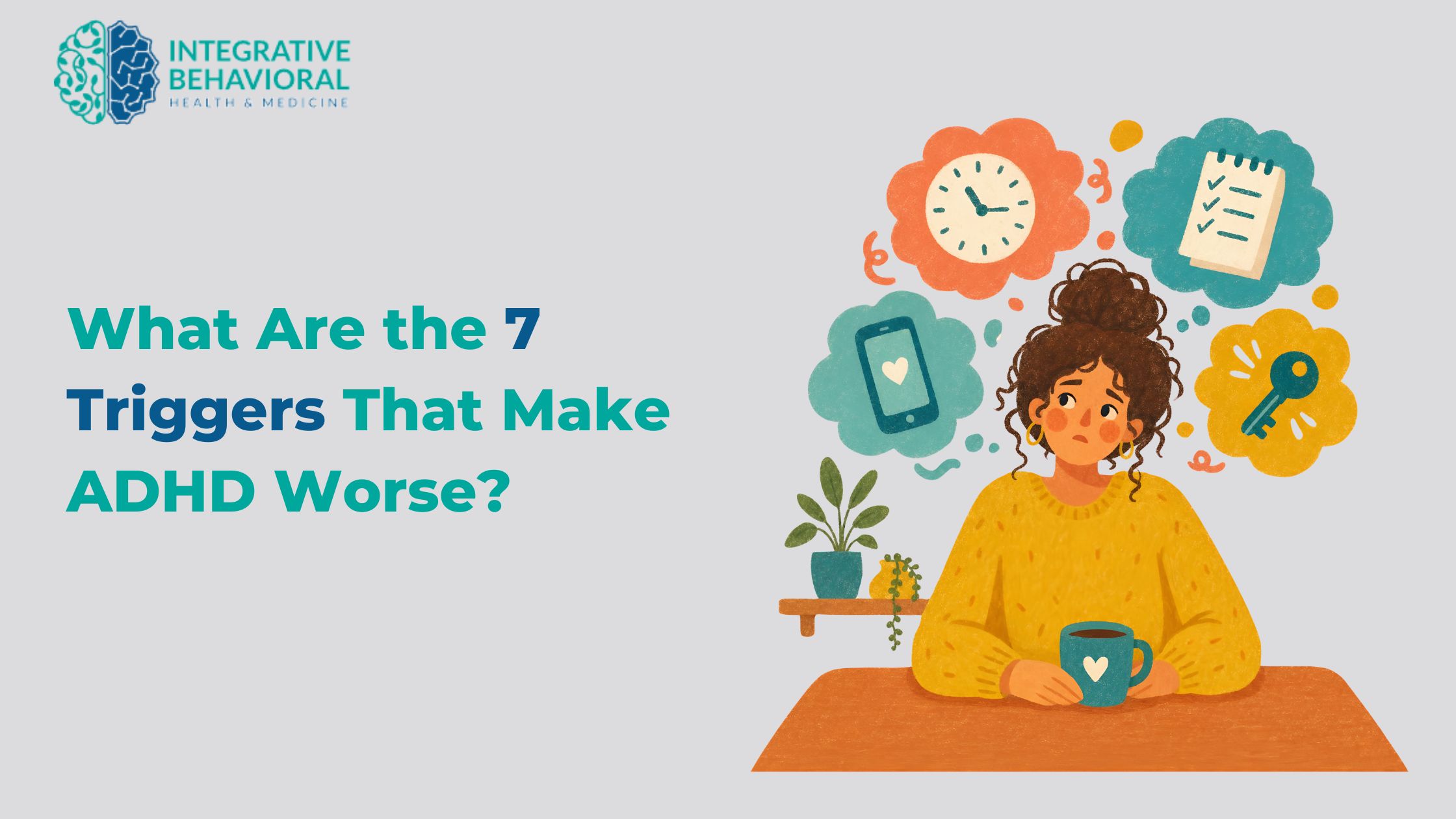
Common ADHD Triggers Explained

Some days, ADHD symptoms feel manageable.
You stay focused longer, complete tasks, respond calmly, and feel mentally organized. But on other days, even small responsibilities can suddenly feel overwhelming. Concentration disappears. Emotions become harder to manage. Motivation drops. Simple tasks start piling up.
For many people living with ADHD, these shifts are not random.
ADHD symptoms often become more intense because of certain triggers—daily habits, environmental factors, emotional stressors, or lifestyle patterns that affect how the brain functions.
Understanding these triggers is important because ADHD is not only about attention. It also affects emotional regulation, executive functioning, energy levels, memory, motivation, and stress response.
The good news is that once people recognize what worsens their ADHD symptoms, they can begin creating routines and coping strategies that support better mental balance.
This article explores the 7 common triggers that can make ADHD worse, why they affect the brain so strongly, and practical ways to reduce their impact.
ADHD symptoms rarely stay exactly the same every day.
Many people notice periods where they feel:
More distracted
Emotionally reactive
Mentally restless
Unmotivated
Disorganized
Forgetful
Overstimulated
This happens because ADHD is heavily influenced by external and internal factors such as sleep, stress, routine changes, emotional overwhelm, and sensory input.
When the brain becomes overloaded, executive functioning becomes harder.
That is why certain triggers can make ADHD symptoms feel significantly worse—even in people who usually manage their condition well.
Stress is one of the biggest ADHD triggers.
When the brain stays in a constant state of pressure or overwhelm, focus and emotional regulation often become much harder.
People with ADHD may already struggle with:
Prioritizing tasks
Managing time
Emotional control
Organization
Decision-making
When stress increases, these difficulties can intensify quickly.
Stress can lead to:
Racing thoughts
Irritability
Increased forgetfulness
Difficulty focusing
Emotional outbursts
Mental exhaustion
Task paralysis
Even small responsibilities may suddenly feel impossible to handle.
For adults, common stress triggers include:
Work pressure
Financial problems
Relationship conflicts
Parenting responsibilities
Academic deadlines
Burnout
Over time, chronic stress can create a cycle where ADHD symptoms increase, which then creates even more stress.
Reducing stress may include:
Building realistic routines
Breaking tasks into smaller steps
Taking mental breaks
Practicing mindfulness
Setting boundaries
Getting professional support when needed
Sleep problems and ADHD are closely connected.
Many people with ADHD struggle with:
Difficulty falling asleep
Restless sleep
Racing thoughts at night
Irregular sleep schedules
Mental hyperactivity
Unfortunately, lack of sleep often worsens ADHD symptoms dramatically.
The brain relies on sleep for:
Focus
Emotional regulation
Memory
Impulse control
Mental clarity
Without proper rest, ADHD symptoms may become more noticeable.
Common signs include:
Increased distraction
Mood swings
Low patience
Brain fog
Poor concentration
Forgetfulness
Sleep deprivation can sometimes make ADHD symptoms appear more severe than they actually are.
Supportive sleep habits may include:
Keeping consistent sleep schedules
Reducing screen exposure before bed
Limiting caffeine late in the day
Creating calming nighttime routines
Avoiding overstimulation at night
Modern digital environments constantly compete for attention.
Social media notifications, short-form videos, multitasking, and endless scrolling can overstimulate the ADHD brain.
Many people with ADHD are naturally drawn toward high-stimulation activities because the brain seeks novelty and dopamine.
However, too much digital stimulation may worsen:
Attention span
Restlessness
Mental fatigue
Impulsivity
Procrastination
You may notice:
Difficulty staying focused offline
Constant urge to check devices
Reduced patience
Trouble completing tasks
Increased mental clutter
Sleep disruption
Screen overload can also make transitioning into calm or structured activities more difficult.
Reducing digital overwhelm may include:
Limiting unnecessary notifications
Scheduling screen-free periods
Taking breaks from social media
Using focus timers
Avoiding multitasking while working
Small changes in digital habits can significantly improve mental clarity.
Many people with ADHD struggle without clear routines.
While some enjoy spontaneity, too little structure often leads to:
Missed responsibilities
Disorganization
Poor time management
Mental chaos
Procrastination
The ADHD brain typically works better with external systems rather than relying entirely on memory or motivation.
Routines reduce mental overload.
Instead of constantly deciding what to do next, the brain can follow predictable patterns.
Without structure, everyday tasks may feel mentally exhausting.
This is why sudden schedule changes, inconsistent habits, or unorganized environments can worsen symptoms quickly.
Supportive systems may include:
Daily checklists
Calendar reminders
Time-blocking
Meal routines
Consistent wake-up times
Organized workspaces
The goal is not perfection. It is reducing unnecessary mental stress.
ADHD is not only about attention - it also affects emotions.
Many people with ADHD experience emotions very intensely.
This may include:
Frustration
Rejection sensitivity
Anxiety
Irritability
Emotional burnout
Feeling overstimulated
Strong emotions can disrupt focus and executive functioning almost immediately.
When emotions become overwhelming, the brain may struggle to:
Think clearly
Stay organized
Process information calmly
Complete tasks
Communicate effectively
Some people become emotionally reactive.
Others shut down completely.
Emotional overload may come from:
Conflict
Criticism
Relationship stress
Overcommitment
Social pressure
Work burnout
Managing emotional overwhelm may involve:
Therapy or counseling
Journaling
Relaxation techniques
Healthy communication habits
Taking sensory breaks
Reducing unnecessary commitments
Emotional balance is an important part of ADHD management.
Food habits can also affect ADHD symptoms.
Skipping meals, consuming excessive sugar, or relying heavily on processed foods may contribute to:
Energy crashes
Mood swings
Difficulty concentrating
Mental fatigue
Irritability
Many people with ADHD also forget to eat regularly or struggle with inconsistent eating schedules.
The brain needs stable energy to function properly.
Long gaps without food may worsen:
Focus
Emotional stability
Patience
Decision-making
Hydration also matters. Even mild dehydration can affect concentration and energy levels.
Helpful habits may include:
Eating balanced meals regularly
Staying hydrated
Preparing simple meal routines
Reducing excessive caffeine or sugar
Keeping healthy snacks available
Nutrition alone will not “fix” ADHD, but it can support better daily functioning.
Many adults with ADHD say “yes” too often.
They may:
Take on too many tasks
Start multiple projects at once
Overestimate available energy
Struggle to recognize burnout early
At first, high energy and excitement may feel motivating. But eventually, mental exhaustion builds up.
Burnout may look like:
Extreme fatigue
Loss of motivation
Emotional numbness
Increased distraction
Avoidance behaviors
Feeling mentally shut down
When burnout happens, even basic tasks can feel overwhelming.
Preventing burnout may involve:
Prioritizing fewer tasks
Allowing recovery time
Learning to say no
Breaking large goals into smaller steps
Avoiding perfectionism
Rest is not laziness. Mental recovery is important for ADHD management.
Not every trigger affects every person the same way.
Some people are more sensitive to:
Sleep loss
Emotional stress
Noise
Digital stimulation
Unstructured schedules
Others may struggle more with burnout or emotional overwhelm.
The key is learning your personal patterns.
Once people identify what makes their ADHD worse, they can begin building healthier systems around their daily lives.
If ADHD symptoms begin affecting:
Relationships
Work performance
Emotional health
Daily functioning
Sleep
Motivation
Stress levels
professional support may help.
An integrative mental health approach may explore:
Behavioral patterns
Lifestyle habits
Stress management
Emotional regulation
Therapy support
Sleep balance
Holistic wellness strategies
Support is not about becoming “perfect.” It is about creating tools that make daily life more manageable.
So, what are the 7 triggers that make ADHD worse?
Common ADHD triggers include:
Chronic stress
Poor sleep
Too much screen time
Lack of routine
Emotional overwhelm
Poor nutrition
Burnout and overcommitment
These triggers can intensify distraction, impulsivity, emotional reactivity, forgetfulness, and mental exhaustion.
The important thing to remember is that ADHD symptoms are not always fixed. They are often influenced by lifestyle patterns, emotional health, stress levels, and daily habits.
Recognizing your triggers is one of the most important steps toward managing ADHD more effectively and building a healthier, more balanced routine.
We have some of the best doctors and therepists on our panel. We are here to provide the best care for you. Although we may not be always perfect, but we strive to provide the best care and experience to our patients.
























We are in network with most major insurance providers in California. If you do not see your insurance provider here, please call us. We may still be able to serve you. All our providers can provide services on cash basis as well. NOTE: Our naturopathy services are not covered by any insurance, and is a cash only service.
















.
Read More
Integrative Treatment of Brain Fog
Read More
The Transformative Role of Supplements
Read More
Harnessing Holistic Healing for Mental Health Success, an in-depth explanation
Read More
Integrative Diagnosis and Treatment of ADHD
Read More
A Comprehensive Guide to Psychiatry and Mental Well-Being
Read More
‘Insta-gratification’ is so addictive—so are all social media apps. Isn’t it? Just why it is important to pay close attention to the interconnected nature of social media and mental health.
Read More
Achieve Hormone Balance and Mental Health to Understand the Intimacy Between Mood Swings and Molecules
Read More
Exploring how short-form content is shaping mental health awareness, ADHD and anxiety education, and digital outreach in California
Read More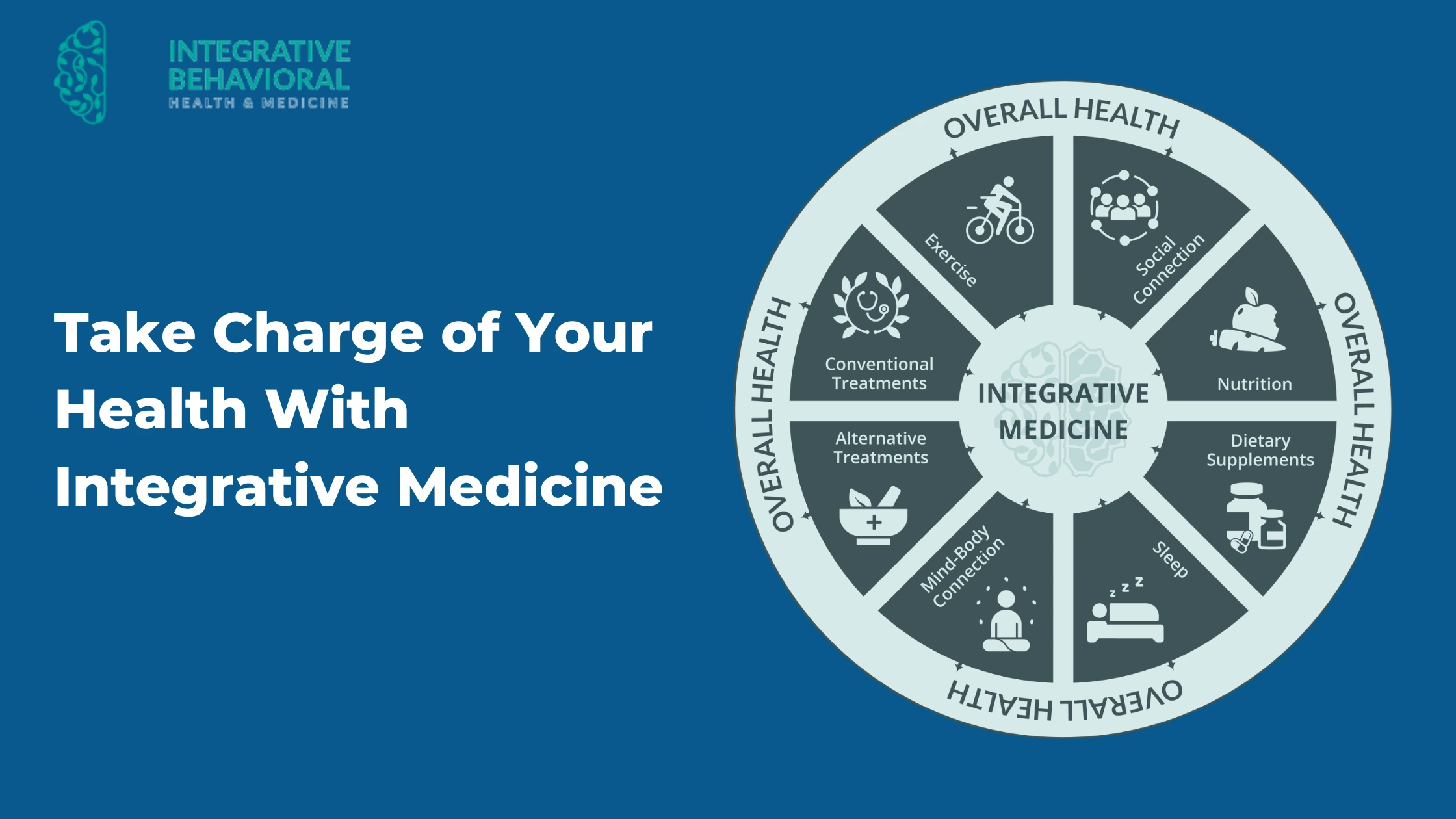
Supporting Your Health Through Evidence-Based Integrative Care
Read More
LGBTQ Issues
Read More
Understand the signs, communication struggles, emotional challenges, and practical ways couples can build healthier, more supportive relationships when ADHD affects marriage and daily life.
Read More
Feeling low, tired, or not like yourself lately? Here are simple answers to help you understand depression and what it can look like in everyday life.
Read More
Naturopathy in Modern Integrative Healthcare
Read More
Bridging Conventional and Complementary Approaches
Read More
ADHD treatment
Read More
Feeling anxious, restless, or stuck in your thoughts? Here are simple answers to help you understand anxiety and handle everyday situations a little better.
Read More
A closer look at how constant AI exposure shapes stress, mood, and mental well-being in the digital age.
Read More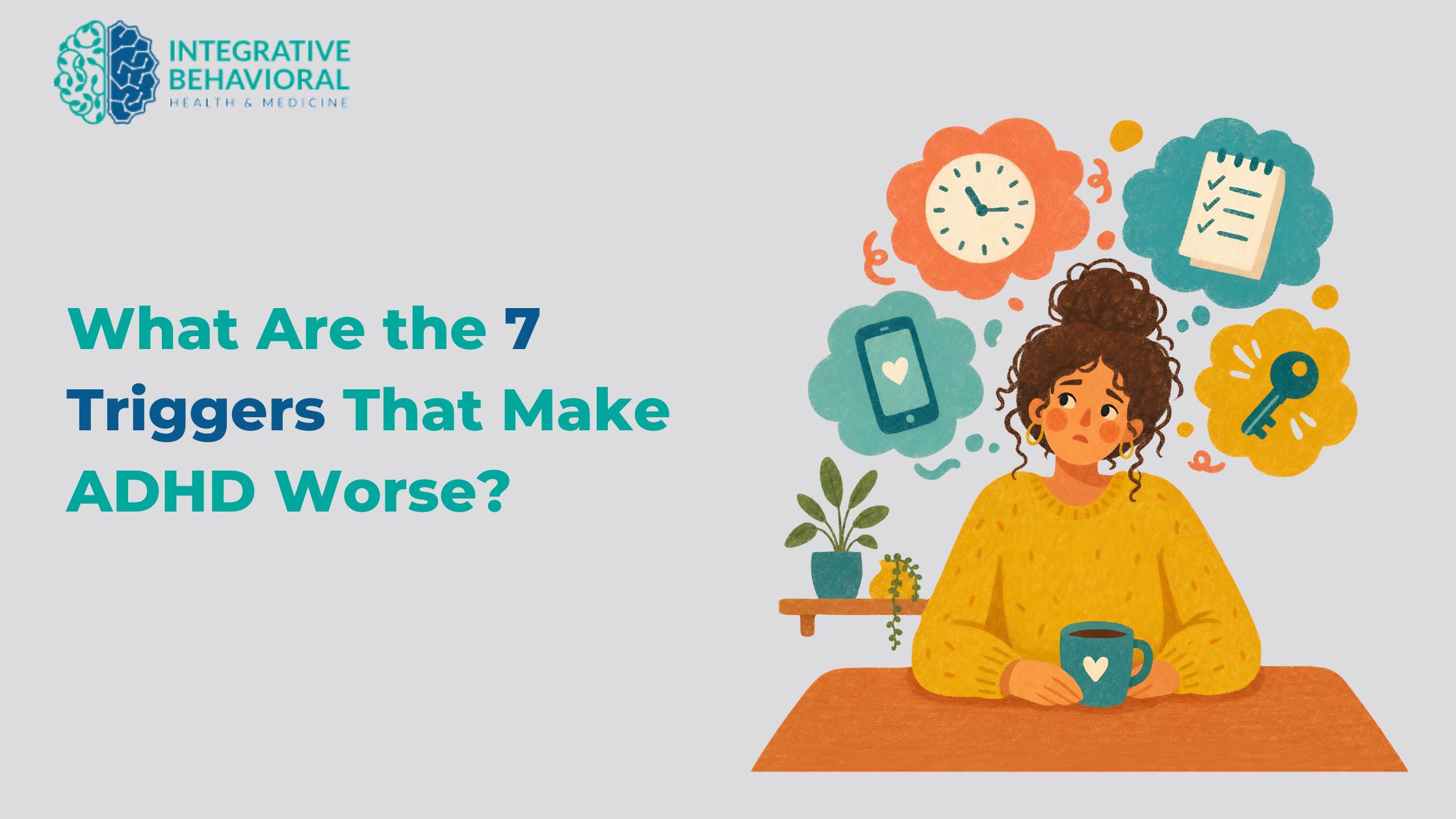
Common ADHD Triggers Explained
Read More
Anxiety and Integrative Medicine - Healing Anxiety and Its Causes Inside Out
Read More
Struggling to stay focused or organized? Here are simple answers to help you understand ADHD and handle everyday situations better.
Read More
When Trauma Prevails—How to Manage PTSD With Integrative Medicine
Read More
What Science Says About the Mind-Body Connection for Better Health
Read More
A Comprehensive Guide
Read More
Understand the real impact of depression and ways to seek support.
Read More
Treatment of depression using Integrative Medicine
Read More
Nutrition in Complementary and Alternative Medicine
Read More